The moment a cup of coffee tips over onto the carpet, or a piece of food lands on the sofa, is enough to ruin any homemaker's day. The good news is that acting fast in the first few minutes usually determines whether the stain will disappear completely or turn into a permanent mark. A fresh, still-wet stain is far easier to treat than one that has dried and worked its way into the fibers. In this practical guide from Wathab Jeddah Cleaning Services, we give you the steps of stain first aid for carpets and sofas, along with important warnings that protect you from making the problem worse.
The Golden Rule: Blot, Don't Rub
The first and most important rule for any spill is to blot, not rub. Use a clean paper towel or a white cotton cloth and press it onto the stain, working from the outer edge toward the center, to absorb as much liquid as possible. Rubbing in circular motions spreads the liquid over a wider area and drives it deep into the fibers, where it becomes difficult to extract.
Repeat the pressing with a fresh clean cloth each time so you do not transfer dirt back into the fabric. The earlier you start, the less liquid reaches the carpet's fabric backing or the sofa's foam padding.
Treating Stains According to Their Type
Not all stains are treated the same way — each type has its own characteristics. Below are general guidelines for the most common household stains:
- Coffee and tea: Blot the liquid immediately, then treat the spot with lukewarm water mixed with a little diluted white vinegar, blotting continuously as you go.
- Grease and oils: Sprinkle cornstarch or baking soda to absorb the grease, leave it for a few minutes, then vacuum it up before gentle treatment.
- Colored juices: Treat quickly with cold water, and avoid hot water, which can set the dye.
- Ink: Dab it gently without rubbing — ink spreads easily and usually needs specialized treatment.
- Mud and dirt: Let it dry completely, then break it up and vacuum it before treating any remaining trace.
The First-Aid Tools You Should Keep on Hand
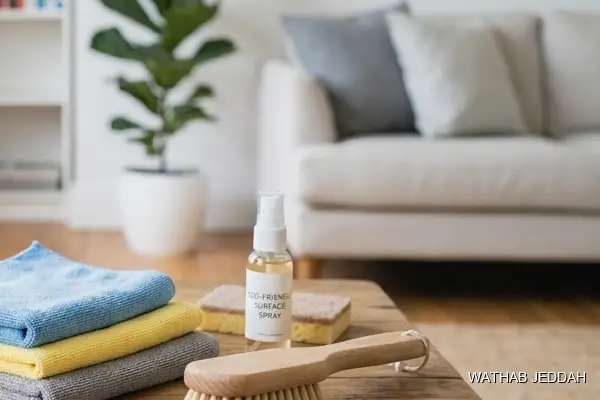
Advance preparation is half the solution. Keep a small kit within easy reach containing quick-treatment tools — having them ready saves the precious minutes that decide a stain's fate. The most important items to include:
- Clean white cotton towels — white is preferred so no dye transfers into the fabric.
- Diluted white vinegar, effective against many organic stains.
- Baking soda and cornstarch for absorbing grease and odors.
- A cold-water spray bottle for dampening the spot in a controlled way without overdoing it.
- A blunt plastic spoon for lifting solids such as food or mud.
Avoid putting strong detergents or colored bleaches in this kit — the goal is gentle, safe treatment that causes no additional damage.
Special Stains That Need a Different Approach
Alongside the common stains, there are types that require a completely different technique:
- Hardened wax: Let it solidify completely, then gently lift off the mass — never try to wipe it while it is liquid.
- Stuck chewing gum: Chill it until it hardens, then peel it away; avoid pulling at it while it is soft.
- Cosmetics stains: Wipe gently from the edges toward the center to keep them from spreading.
- Fresh blood: Treat with cold water only — never any heat whatsoever.
In all these cases the rule stays the same: start with the gentlest option, test any product on a hidden corner, and never rush into strong chemicals that could make the problem worse.
A Worked Example: Treating a Coffee Stain on a Carpet
Let us apply the above to a real-life situation. A cup of coffee has spilled on the living room carpet. The first step is to rush to blot the liquid with a white towel, pressing from the edges toward the center and switching towels as each becomes saturated. Once you have drawn out as much liquid as possible, dampen the spot with a little lukewarm water mixed with a teaspoon of white vinegar, then keep blotting.
Repeat the dampening and blotting until the color gradually fades, taking care not to soak the carpet with water. Finally, dry the spot thoroughly with a clean dry towel and turn on ventilation or a fan to speed up drying and prevent any moisture from remaining in the backing. This simple sequence is enough to remove most fresh coffee stains before they set.
A Quick Stain First-Aid Table
Keep this reference table in your kitchen so you can act fast in any emergency:
| Stain Type | First Response | What to Avoid |
|---|---|---|
| Coffee and tea | Immediate blotting, then lukewarm water with diluted vinegar | Hard rubbing |
| Grease | Sprinkle an absorbent powder, then vacuum | Hot water applied directly |
| Colored juices | Cold water and repeated blotting | Hot water |
| Blood | Cold water only | Hot water, without exception |
| Ink | Gentle dabbing and containing the stain | Spreading the mark by rubbing |
Mistakes That Turn a Simple Stain into a Permanent Problem
The real cause of many permanent stains is not the spilled liquid itself but the wrong treatment. Beware of these mistakes:
- Using hot water on protein-based stains such as blood and milk — heat makes them coagulate and bond to the fibers.
- Mixing cleaning products together, which can trigger a reaction that leaves a worse stain or damages the fabric.
- Using too much water, which seeps into the backing and causes odors and mold, especially in Jeddah's humidity.
- Applying strong bleach to colored fabrics, stripping the color and leaving a light patch instead of a dark one.
The safe rule is to test any cleaner on a hidden corner first, and always to start with the mildest option before working up to something stronger.
Table: Safe Household Materials for Each Stain Type
In many cases there is no need for expensive cleaners — simple household materials are effective and safe when used correctly:
| Stain Type | Safe Household Material | Usage Note |
|---|---|---|
| Coffee and tea | White vinegar diluted with lukewarm water | With repeated blotting |
| Grease and oils | Cornstarch or baking soda | For absorption before wiping |
| Lingering odors | Dry baking soda | Sprinkle, then vacuum after a few hours |
| Colored juices | Cold water only | Prevents the dye from setting |
Always remember to test any material on a hidden corner first, never mix more than one material together, and start with the lowest possible concentration.
When Is a Stain a Health Hazard That Requires Sanitizing?
Some stains are not merely a cosmetic problem — they can pose a health hazard that calls for sanitizing, not just cleaning. This applies to biological fluids or decomposing food, which attract bacteria and become a breeding ground for microbes and odors, especially in Jeddah's humidity, which accelerates decomposition.
In such cases, removing the visible color is not enough; the area must be sanitized to destroy the germs hiding deep inside. This is where hot steam cleaning, which sanitizes through heat, or specialized treatment comes into its own, guaranteeing a safe, healthy environment for the family. If there are children in the home, or anyone with a weakened immune system, treating such stains seriously is not something to take lightly.
How Sofas Differ from Carpets in Stain Treatment
Sofas and carpets share the rule of immediate blotting, but sofas are far more sensitive to the amount of water used, because their foam padding holds moisture for a long time and is hard to air out. So when treating a stain on a sofa, use the smallest possible amount of liquid, rely on repeated blotting, and avoid saturating the fabric.
Carpets can tolerate a bit more moisture, but they must be dried thoroughly after treatment by ventilating the room or using a fan, so the moisture does not transfer to the floor beneath. Colorfastness also differs between carpets and sofas, which is why testing the cleaner first remains essential in both cases.
When Should You Stop Trying and Call the Professionals?
Some stains are beyond home treatment, and persistently trying to remove them can increase the damage. Seek specialized help in these cases:
- Old, dried stains that penetrated the fibers some time ago.
- Large stains, or stains spread over a wide area.
- Stains from difficult substances such as permanent ink, dyes, or wax.
- Valuable or delicate fabrics such as silk, velvet, and handmade rugs.
A professional team has specialized cleaners for every stain type and extraction machines that pull the mark out from deep inside without damaging the material — something that is hard to achieve with household tools.
The Difference Between a Fresh Stain and a Set-In Color Mark
It is important to understand that what looks like one stain may actually be one of two very different things. A fresh stain is liquid that is still recent and has not yet dried — it is the easiest to treat with quick blotting. A set-in color mark, on the other hand, is a dye that has penetrated the fibers, dried, and bonded to them chemically, and this type usually resists home treatment.
Recognizing this difference saves you wasted effort: a fresh stain deserves an immediate rush to treat it, while a set-in mark usually requires specialized cleaners and extraction machines not available at home. Trying to remove a set-in mark by scrubbing hard can destroy the fibers without removing the color, so distinguishing early between the two cases leads you to the right decision: treat it myself, or call a specialist?
The Time Factor: Why Does Treating Old Stains Fail?
Time is the single biggest factor in the success of stain treatment. When liquid first lands, it sits on the surface of the fibers; then, as it dries, it gradually penetrates toward the depths; and finally it bonds with the fibers in a way that is hard to undo. That is why a stain treated within the first minutes is completely different from one left for hours or days.
This explains why so many attempts to remove old stains fail despite great effort — the problem is no longer on the surface but inside the structure of the fibers themselves. The practical lesson is clear: never postpone treating a spill, however small, because the first minutes are worth more than hours of scrubbing later. And when you discover an old stain, it is wiser to hand it to a specialist than to expose your furnishings to damage through repeated failed attempts.
Preventive Tips That Reduce Emergencies
Prevention is always easier than cure. You can reduce stain accidents with simple house rules, such as avoiding eating and drinking colored beverages directly over light-colored carpets, and using washable covers on heavily used sofas. Preventive treatment with a stain-repellent protective layer during professional cleaning also makes liquids bead on the surface instead of soaking in, giving you more time to react.
Keep a stain first-aid kit within reach as well, stocked with white towels, white vinegar, and baking soda, so you are ready at the critical moment. Advance preparation makes the difference between a stain that disappears and a mark that stays.
Summary
The secret to handling emergency stains is speed, calm, and following the golden rule: blot, don't rub; start with the mildest option; avoid hot water on protein stains; and never overdo the liquids. And when household methods fall short, calling in a specialist protects your furnishings from permanent damage.
At Wathab Jeddah Cleaning Services, we handle the toughest stains on carpets and sofas with expertise and specialized equipment that restores your furnishings to full cleanliness. Whenever you face a stain beyond your means, contact us immediately at 0567837359 and we will reach you in any neighborhood of Jeddah to rescue your furnishings.