The sofa is the heart of the majlis and the living room — it is the first thing a guest's eye falls on and the most heavily used piece of furniture in the house. With all the sitting, eating, and drinking that happens around it, the sofa is exposed to stains, odors, and dust that work their way deep into the padding. When a homeowner decides to clean it, they face two main options: steam cleaning or dry cleaning. What is the difference between them? And which one suits your sofa's fabric and condition? In this article from Wathab Jeddah Cleaning Services, we explain the difference clearly to help you make the right decision.
What Is Steam Cleaning?
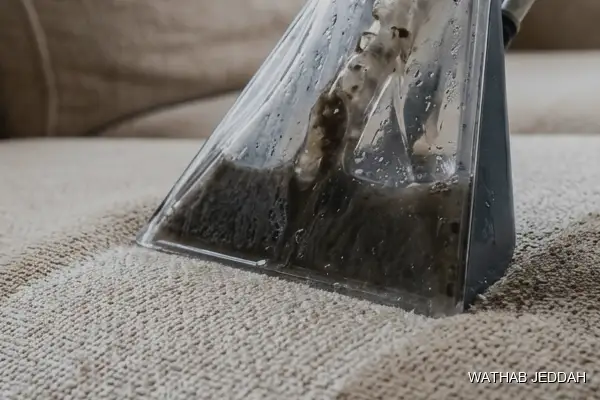
Steam cleaning relies on generating high-temperature water vapor that is injected into the fabric fibers, dissolving grease and breaking down trapped dirt, after which the water and dirt are extracted together with a powerful suction machine. Its greatest advantage is that it sanitizes the fabric — the high heat kills dust mites, bacteria, and the odors they produce, without needing large quantities of chemicals.
This method is ideal for deeply soiled sofas or those where odors have accumulated. It is also highly effective in homes with children or allergy sufferers, because it removes allergens from deep within the padding. However, it does require a longer drying time and is not suitable for every fabric type, as we will explain below.
What Is Dry Cleaning?
Dry cleaning uses special low-moisture solvents and powders that lift dirt from the fabric's surface and interior without saturating it with water. The cleaning agent is distributed, then gently brushed in so the dirt bonds to it, and finally everything is vacuumed away completely. Its biggest advantage is that it dries quickly — the sofa can be used again a short time after the process is finished.
This method is the best choice for delicate fabrics that water could damage, such as velvet and certain types of linen and silk, as well as sofas whose care label carries the dry-clean-only symbol. It also suits heavily used majlis seating that cannot be taken out of service for long hours while waiting to dry.
Comparison Table: Steam vs. Dry Cleaning
To make the choice easier, here is a direct comparison between the two methods across the most important practical aspects:
| Criterion | Steam Cleaning | Dry Cleaning |
|---|---|---|
| Moisture level | High | Very low |
| Drying time | 4 to 6 hours | 30 minutes to an hour |
| Sanitizing power | High, thanks to the heat | Limited |
| Best suited for | Cotton, synthetic fabrics, deep soiling | Velvet, silk, and delicate fabrics |
| Odor and dust mite removal | Excellent | Good |
How to Identify Your Sofa's Fabric Before Choosing
Most sofas carry a care label under the seat cushion or behind the backrest with symbols indicating the recommended cleaning method:
- The water symbol means the fabric can handle water-based or steam cleaning.
- The solvent symbol means the fabric requires dry cleaning only.
- Both symbols together mean the fabric accepts either method, and you can then choose based on the degree of soiling.
- The prohibition symbol means a specialist must be brought in to avoid damage.
If you cannot find the label or do not understand its symbols, the safest option is to consult a professional team who will examine the fabric and test its colorfastness in a hidden spot before starting.
Factors That Determine the Best Method for Your Sofa
No single method works for every case. The decision depends on a set of factors we take into account in our sofa cleaning service:
- Fabric type: Delicate fabrics tip the balance toward dry cleaning; durable ones can handle steam.
- Degree of soiling: Deep dirt and old stains need the power of steam.
- How quickly you need it back: If you need the sofa in use again fast, dry cleaning is the better fit.
- Allergies in the household: Steam is preferred for its ability to sanitize and eliminate dust mites.
In many cases a professional team combines both methods, starting by treating stubborn stains and then choosing the main method that suits the rest of the piece.
Common Mistakes When Choosing a Sofa Cleaning Method
Choosing wrong can ruin the result even with the best intentions. One of the most common mistakes is applying one method to every fabric — what works for cotton can destroy velvet. Some people choose steam for a delicate sofa simply because they assume it is always the more powerful option, and end up with faded or shrunken fabric.
Another mistake is ignoring the care label underneath the sofa and diving into cleaning without knowing the recommended method. Others fall into the trap of haste, picking the fastest method without considering how dirty the sofa really is, leaving the deep grime exactly where it was. Avoiding these mistakes starts with knowing your fabric type and its condition before any decision, and seeking a specialist's opinion when in doubt.
The Steam Cleaning Process, Step by Step
To paint a clearer picture, here are the stages a sofa goes through when steam cleaned by a professional team:
- Inspection and colorfastness testing: The fabric type is examined and its colors are tested in a hidden spot before any step is taken.
- Initial dry vacuuming: Dust, hair, and crumbs are vacuumed from the padding before any moisture is introduced.
- Pre-treating stains: Stubborn stains are treated with a targeted spot cleaner suited to each type.
- Steam injection and extraction: Hot steam is injected and immediately drawn out along with the dissolved dirt.
- Drying and ventilation: Drying is accelerated with powerful suction and airflow to prevent residual moisture.
This organized sequence is what separates a professional result from random home attempts — each stage ensures the fabric is not damaged and that the dirt is pulled out from deep inside.
How Each Method Affects Your Sofa's Lifespan
Choosing the right method affects not only cleanliness but also the lifespan of your furniture. Cleaning with excess water or high heat on a fabric that cannot tolerate them can cause shrinkage, fading, or damage to the inner padding. Conversely, neglecting deep cleaning lets dirt and oils accumulate in the fibers, gradually wearing them down until the fabric loses its suppleness.
The balanced rule is to deep clean the sofa every six months to a year depending on how heavily it is used, along with light weekly vacuuming and immediate treatment of any stain. This balance between routine care and deep cleaning extends the sofa's life and keeps its appearance and softness for as long as possible.
Can Both Methods Be Combined on the Same Piece?
In many cases the choice between steam and dry cleaning is not an either-or decision — the two can be combined intelligently on a single piece. The team may begin by spot-treating stubborn stains with suitable solvents, then apply the main method that matches the fabric across the rest of the surface.
This combination is especially useful for sofas made of multiple fabrics or those carrying scattered stains of different natures, because it gives each area the treatment best suited to it rather than forcing one solution on everything. Decisions like these require diagnostic experience, which is exactly what a professional team provides after inspecting the piece and identifying the needs of each part individually.
Caring for Your Sofa Right After Cleaning
Once the cleaning is done, a few steps ensure the best result and protect the fabric. Avoid sitting on the sofa before it is fully dry so you do not press moisture back into the padding, and ventilate the room well by opening windows or running the air conditioner to speed up drying. Do not cover the sofa with plastic covers immediately after cleaning, as they trap moisture and cause odors.
You can also request an additional stain-guard protective treatment during the service. It makes liquids bead on the surface instead of soaking in, giving you more time to react to any future spill. These finishing touches preserve the cleaning result for longer and reduce the need to repeat it soon.
Mistakes to Avoid When Cleaning a Sofa at Home
Attempting to clean a sofa without experience can cause damage that is hard to repair. Avoid pouring water directly onto the fabric — it seeps into the foam padding and causes odors and mold that are difficult to eliminate, especially in Jeddah's humid climate. Likewise, avoid using a hair dryer or direct heat sources to speed up drying, as they can leave marks on the fabric.
Another common mistake is mixing several cleaning products together in the belief that this boosts effectiveness, when in fact the mixture can trigger reactions that harm the fabric and leave permanent stains. The rule is to use one product suited to the material and to test it first in an inconspicuous area.
Table: Common Sofa Problems and the Right Approach
Many homeowners face recurring sofa problems, each with its own appropriate solution. The following table summarizes the most common ones:
| Problem | Common Cause | Recommended Approach |
|---|---|---|
| Odors trapped in the padding | Moisture and accumulated organic dirt | Steam cleaning for sanitizing |
| Greasy stains on armrests | Contact with food and hands | Spot treatment followed by suitable cleaning |
| Faded velvet color | Friction and harsh detergents | Gentle dry cleaning |
| Accumulated hair and dust | Pets and infrequent vacuuming | Regular deep vacuuming |
Seasonal Tips for Sofa Cleaning in Jeddah's Climate
Jeddah's coastal climate imposes special considerations on sofa care throughout the year. In the humid summer, the chances of moisture becoming trapped in the padding increase, so it is better to choose low-moisture methods or to guarantee thorough drying after any steam cleaning, with the air conditioning running to draw out humidity.
During dust storm seasons, fine dust settles on fabric at twice the usual rate, which calls for more frequent weekly vacuuming and keeping nearby windows closed during dust waves. Before hosting seasons and special occasions, schedule a deep clean well in advance so the sofa dries completely and regains its freshness. Taking these seasonal factors into account preserves your sofa and reduces recurring problems.
Frequently Asked Questions About Sofa Cleaning
A number of questions come up repeatedly when homeowners think about cleaning their sofas. First: does steam cleaning remove every type of stain? The truth is that steam is very effective against most organic and greasy stains, but some stubborn stains such as ink and dyes may need specialized pre-treatment. Second: how often should a sofa be cleaned? A deep clean every six months to a year suits most homes, depending on how heavily the sofa is used.
The most common question of all: does cleaning leave behind odor or dampness? The answer is that proper professional cleaning leaves the fabric clean and fresh with no excess moisture, provided the correct drying procedure is followed. These questions underline the importance of hiring a team that explains your options and answers your queries before starting.
The Bottom Line — and When to Call the Professionals
In short, choose steam if your sofa is durable, deeply soiled, and you want it sanitized; choose dry cleaning if the fabric is delicate or you need the sofa back in use quickly. In unclear cases, calling a specialist is the surest way to protect your furniture and extend its life. You can also combine sofa cleaning with our steam cleaning service for curtains and upholstery to get a completely clean, sanitized majlis.
At Wathab Jeddah Cleaning Services, we operate modern steam machines and dry cleaning systems, with a trained team that diagnoses your fabric type and carefully selects the optimal method. To book an appointment or ask about prices anywhere in Jeddah, contact us now at 0567837359 and leave your furniture in safe hands.